
Key Takeaways
-
Keep high-traffic and high-touch areas clean and organized.
-
Follow proper cleaning, sanitizing, and disinfecting practices.
-
Include indoor air quality, ventilation, and moisture control in maintenance plans.
-
Use a consistent daily, weekly, and seasonal cleaning schedule.
-
Track cleaning tasks and promptly address spills, leaks, and maintenance issues.
A well-kept workplace helps people move through the day with fewer avoidable distractions. In Turnersville, NJ, where offices, retail spaces, professional suites, and shared commercial buildings often see steady foot traffic, cleanliness affects how employees, visitors, and clients experience a space from the moment they enter.
For businesses that need recurring support, janitorial services Turnersville, NJ can be part of a consistent maintenance plan. Paradise Clean & Green is a Turnersville-based South Jersey cleaning provider whose contact information lists residential and commercial cleaning services, including janitorial work, carpet care, upholstery cleaning, and hard-floor cleaning. That mix of local commercial and property-cleaning services makes the company a relevant point of contact for workplaces seeking help with routine upkeep.
Why Workplace Cleanliness Deserves More Attention in 2026
Workplace cleanliness involves more than trash removal; it includes managing clutter, maintaining floors, quickly addressing spills, cleaning shared touchpoints, and keeping kitchens and restrooms usable. Visible disorder disrupts routines, while organized spaces help people find what they need and use areas responsibly. A cleaning plan supports health and comfort but doesn’t replace building-management procedures, safety rules, medical advice, or specialized cleaning. Facilities handling food, healthcare, manufacturing, or hazardous materials may need extra procedures.
The Main Areas That Need Regular Care
Every workplace has different priorities, but the following areas usually need regular attention:
-
Entryways and reception areas: Remove tracked-in dirt, clean glass, empty waste bins, and keep seating presentable.
-
Shared desks and workstations: Wipe desks, keyboards, phones, and shared equipment using products appropriate for each surface.
-
Break rooms and kitchens: Clean counters, sinks, appliance handles, tables, and food-waste containers.
-
Restrooms: Maintain fixtures, dispensers, floors, handles, and frequently touched surfaces.
-
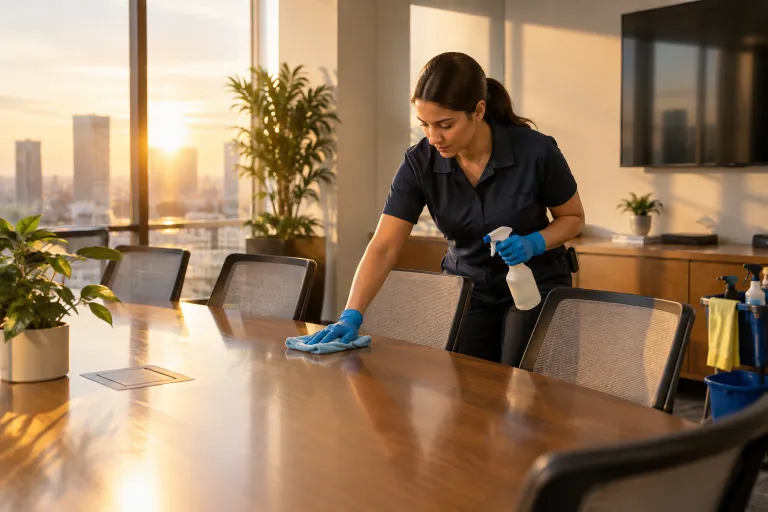
Meeting rooms: Reset tables, chairs, remotes, whiteboards, and door handles between periods of heavy use.
-
Floors and soft surfaces: Vacuum carpeting and upholstered seating, then maintain hard flooring with the correct methods.
Cleaning, Sanitizing, and Disinfecting: Know the Difference
Cleaning removes dirt, dust, debris, and germs from surfaces. Sanitizing reduces germs after cleaning. Disinfecting is for visibly ill individuals, high-touch areas, or when specific protocols require it. CDC advises cleaning before sanitizing or disinfecting.
Always follow product labels, surface type, dilution, protective gear, and contact time. Never mix chemicals; it can cause hazards and residues without benefits.
How Indoor Air Quality Fits into a Cleaning Plan
Dust, moisture, odors, chemical vapors, and airflow all influence how a workplace feels. Cleaning can reduce settled dust and remove odor sources, but it cannot solve every indoor air issue on its own. HVAC maintenance, filtration, ventilation, source control, and moisture management all matter.
The EPA’s office indoor air quality guide recommends keeping vents and grilles clear, disposing of garbage promptly, storing food properly, and reporting suspected air-quality concerns. In a busy Turnersville workplace, boxes, furniture, or supplies should not block supply vents or return grilles. Water leaks, damp ceiling tiles, persistent odors, and condensation should be reported quickly.
A Simple Workplace Cleaning Schedule
Daily Tasks
-
Remove trash and food waste.
-
Clean restroom fixtures, touchpoints, and floors as needed.
-
Wipe shared counters, handles, switches, and equipment.
-
Address spills promptly and mark wet floors when necessary.
-
Clean break-room counters, sinks, and appliance handles.
Weekly Tasks
-
Vacuum carpets, rugs, and fabric seating.
-
Mop hard floors with a surface-appropriate product.
-
Dust ledges, vents, corners, and less visible surfaces.
-
Clean interior glass, meeting rooms, and storage areas.
Monthly or Seasonal Tasks
-
Schedule deeper carpet, upholstery, or floor care.
-
Inspect for moisture, water damage, and musty odors.
-
Review product inventory, labels, and safety data sheets.
-
Update tasks after renovations, staffing changes, or shifts in building use.
How to Build a Checklist That Works
-
List every room, entrance, hallway, restroom, and shared area.
-
Mark high-touch surfaces and high-traffic zones.
-
Assign tasks by frequency: daily, weekly, monthly, or as needed.
-
Define what clean looks like for each area.
-
Record completed work and unresolved issues, such as leaks or damaged flooring.
-
Review the checklist after complaints, seasonal weather changes, or layout updates.
Common Mistakes That Reduce Cleaning Results
Common problems include focusing only on visible surfaces, rushing restroom and break-room cleaning, using the wrong product for flooring, ignoring carpets and upholstery, and failing to ventilate when products are in use. Clutter can also make cleaning less effective by blocking access to floor edges, vents, exits, and storage areas. Documentation matters because recurring concerns are easier to spot when completed tasks and unresolved problems are recorded.
When to Use an Outside Cleaning Professional
Outside support can be useful when internal staff lack the time, equipment, or training for recurring janitorial work, large floor areas, upholstery care, carpet cleaning, or periodic deep cleaning. Before choosing a provider, compare service schedules, communication practices, cleaning methods, insurance coverage, and the company’s handling of special requests and building access procedures.
Questions Facility Managers Often Ask
How often should an office be professionally cleaned?
Frequency depends on staffing levels, visitor volume, shared spaces, building use, and the type of work performed. A small office may need a different schedule than a client-facing business, retail location, or multi-tenant property.
Which surfaces need the most attention?
Prioritize door handles, elevator buttons, light switches, shared devices, counters, restroom fixtures, break-room appliances, and other frequently touched items.
Can cleaning improve indoor air quality?
It can help control dust, food waste, and some odor sources. However, ventilation, filtration, HVAC upkeep, and moisture control are also necessary for a complete approach.
What should happen after a spill or water leak?
Restrict access if there is a slip risk, report the issue promptly, remove moisture safely, and inspect nearby materials for damage. Quick follow-up helps prevent a small issue from becoming a larger maintenance problem.
A Practical 2026 Workplace Cleanliness Plan
-
Inspect the property room by room.
-
Identify high-touch and high-traffic areas.
-
Create a written schedule that matches actual building use.
-
Use products suited to each task and surface.
-
Keep vents clear and, when possible, improve ventilation during cleaning.
-
Track completed work, employee concerns, spills, and maintenance needs.
-
Review results every quarter and adjust the plan as the workplace changes.
A healthier workplace is built through steady habits, clear expectations, safe product use, and follow-through. For Turnersville businesses, a practical cleaning plan need not be complicated. It simply needs to fit the space, reflect how people use it, and remain consistent throughout 2026.